

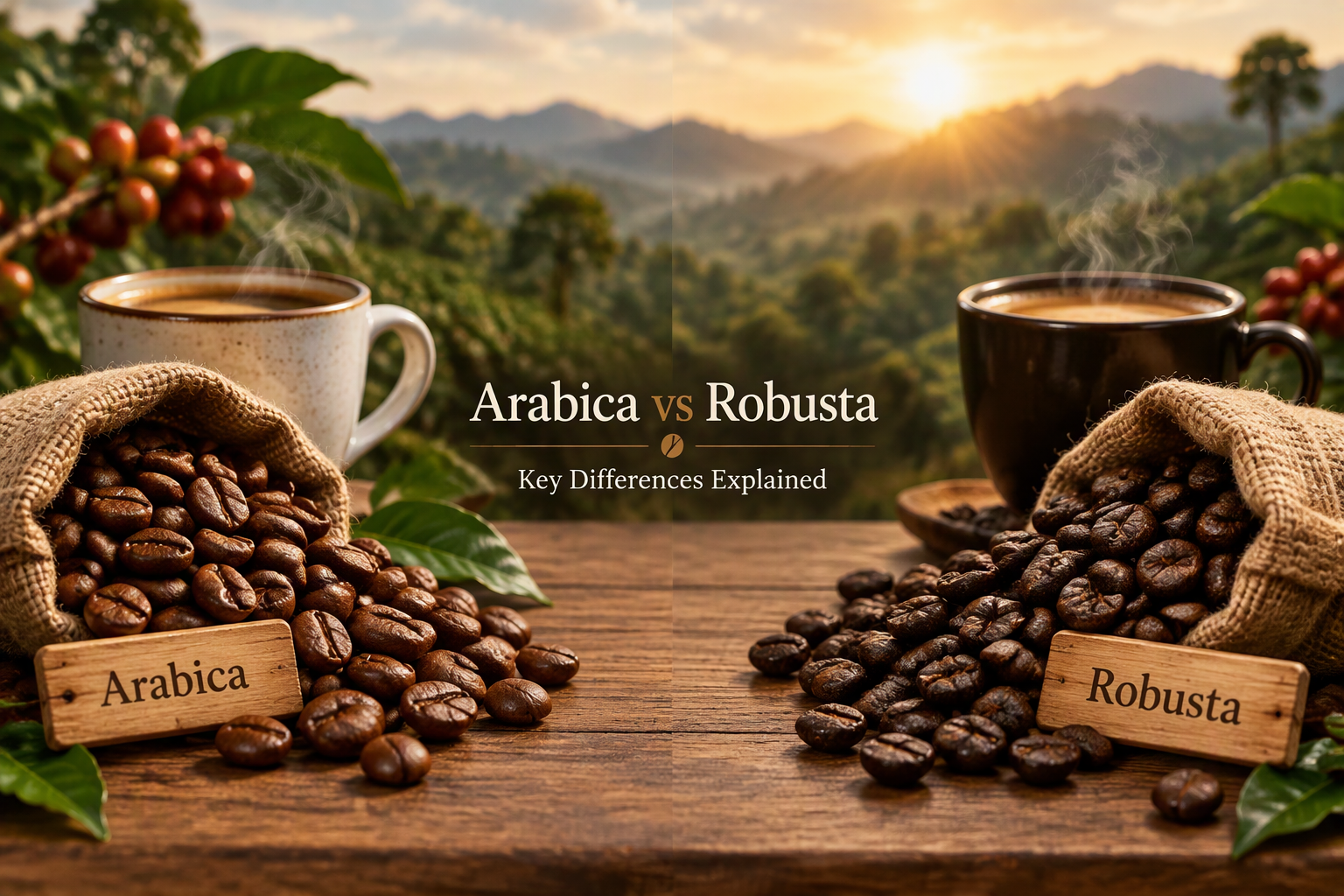
Walk down any coffee aisle and you will see “100% Arabica” printed on one bag and “Arabica-Robusta blend” on another. Those two words describe the two coffee species that fill almost every cup in the world, and they taste, smell and behave very differently. This guide at Cohoma Coffee breaks down the difference between Arabica and Robusta in simple terms, so you can read a label with confidence and pick the right beans for the way you brew.
Quick Answer: What Is the Difference Between Arabica and Robusta?
Arabica is smoother, sweeter and more aromatic, with about 1.5% caffeine and a more complex, slightly acidic taste. Robusta is bolder, more bitter and earthier, with nearly double the caffeine (about 2.7%) and a thicker crema. Arabica grows at higher altitudes and costs more, while Robusta is hardier, cheaper to grow and widely used in instant coffee and espresso blends.
Arabica vs Robusta at a Glance
| Feature | Arabica | Robusta |
|---|---|---|
| Flavour | Smooth, sweet, fruity, floral, chocolatey | Strong, bold, earthy, bitter, nutty or woody |
| Acidity | Higher, bright | Lower, flatter |
| Caffeine | About 1.5% | About 2.7% |
| Sugar and lipids | Roughly twice the sugar and about 60% more lipids | Lower sugar and lipids |
| Chlorogenic acids | About 5.5% to 8% | About 7% to 10% |
| Bean shape | Larger, oval and flatter, with a curved centre crease | Smaller and rounder, with a straighter crease |
| Altitude | Roughly 600 to 2,200 metres | Roughly 0 to 900 metres |
| Plant | Delicate, prone to pests and frost, shorter tree | Hardy, disease and heat resistant, taller tree |
| Share of world production | Around 60% to 75% | Around 25% to 40% |
| Price of green beans | Higher | Often around half the price of Arabica |
| Typical use | Specialty coffee, pour-over, filter, cold brew, light to medium roasts | Instant coffee, espresso blends, strong filter blends |
1. Taste and Aroma
Taste is the first thing most people notice. Arabica has a layered flavour with notes of sugar, caramel, fruit, berries and chocolate, and a lively acidity that gives the cup a clean, bright finish. Robusta tastes more like “classic strong coffee”: bold, earthy and bitter, with nutty or woody tones and very little acidity.
Part of the reason is chemistry. Caffeine and chlorogenic acids both taste bitter, and Robusta carries more of each. Arabica also holds more natural sugars and oils, which round off the edges and add sweetness.
2. Caffeine Content
If you want the biggest caffeine kick per bean, Robusta wins by a wide margin, at roughly 2.7% against about 1.5% in Arabica. The plant makes caffeine as natural protection against insects, which is also why Robusta is so pest resistant.
One honest note: the species is only one part of the story. How much coffee you use, how finely it is ground and how you brew it all change the caffeine in your cup, so a strong Arabica brew can still outpunch a weak Robusta one.
3. Sugar, Oils and Body
Arabica contains almost twice the sugar and about 60% more lipids than Robusta. Those oils give Arabica its smooth mouthfeel and sweetness. Robusta, with less of both, tastes sharper and drier, but it creates a thicker, longer-lasting crema when pulled as espresso.
4. How to Tell the Beans Apart by Sight
You can often tell Arabica and Robusta apart before you brew. Look at the beans:
- Arabica: larger, oval and slightly flat, with a curved, S-shaped line down the centre.
- Robusta: smaller and rounder, with a straighter centre line.
On a packet, the label tells you directly. “100% Arabica” means no Robusta is mixed in, while a blend should list both species or a ratio. If the label only says “coffee”, it is worth checking the product page for the details.
5. Where and How They Grow
Arabica is the original coffee plant, first grown in the highlands of Ethiopia. It is fussy: it wants cool temperatures, steady rainfall, some shade and altitude, because hot days and cool nights slow the cherry down and let more flavour develop. It is also vulnerable to frost, drought, pests and disease, and it gives lower yields.
Robusta comes from central and western Africa. It grows taller, tolerates heat and humidity at lower altitudes, resists disease and gives higher yields, which keeps the cost of growing it down. India grows both species, so Arabica and Robusta from the same country can taste completely different.
6. Price and Production
Arabica makes up the larger share of the world’s coffee, but it takes more land, more labour and more care per kilo, so it costs more. Robusta green beans are often about half the price. That is why Robusta has long been used to bring down the cost of blends and instant coffee.
Is Arabica Always Better Than Robusta?
Not always. Arabica is generally the choice for flavour and complexity, and most specialty coffee is Arabica. But cheap, stale Robusta is very different from carefully grown and freshly roasted Robusta. A good Robusta in a thoughtful blend adds body, crema and strength, while a poorly grown Arabica can taste flat and sour. Freshness, roast and origin matter as much as the species.
There is also a rare third species, Liberica, which is only a tiny share of world production and has a fruity, unusual flavour. For everyday coffee, the choice is between Arabica and Robusta.
Which Should You Choose? A Simple Guide by Brewing Method
| If you brew with… | Lean towards | Why |
|---|---|---|
| Pour-over, filter or French press | Arabica | Clean, sweet, aromatic cups that show origin flavour |
| Cold brew | Arabica, or a blend with a little Robusta | Slow cold extraction brings out sweetness and keeps bitterness low |
| Espresso and milk drinks | A blend with some Robusta | Extra crema and body that stand up to milk |
| Strong South Indian style filter coffee | A blend with Robusta | Robusta adds punch and body to the decoction |
| Black coffee with no sugar | Arabica | Lower bitterness and more natural sweetness |
| Maximum caffeine | Robusta or a blend | Higher caffeine per bean |
Not sure? Choose by your taste. If you like sweet, smooth and fruity, go Arabica. If you like bold, strong and punchy, try a blend with Robusta. You can also mix the two for Arabica’s aroma and Robusta’s strength in one cup.
Arabica and Robusta in Different Coffee Formats
The species you choose also depends on how the coffee reaches your cup:
- Whole beans: freshly roasted coffee beans let you see the bean shape and taste the species difference most clearly. Our guide on how to buy fresh roasted coffee beans explains what to look for.
- Single-serve pods: coffee capsules are made for espresso-style cups, where blends and crema matter. Read how coffee capsules work to learn more.
- Drip-style sachets: coffee bags give you filter-style coffee without any equipment, which suits a smooth, Arabica-style cup.
- Travel: if you want coffee on the move, explore our on-the-go coffee cups.
- Cold coffee: cold brew coffee is where the sweetness of well-roasted beans really shows. See what cold brew coffee is, or learn how to make cold coffee at home without a machine.
Get the Best From Your Beans at Home
Whichever species you pick, a few habits make a bigger difference than the label:
- Buy fresh and buy whole. Grind just before brewing, because ground coffee loses aroma quickly.
- Match the grind to the method. Coarse for French press and cold brew, medium for filter, fine for espresso.
- Measure. A small scale and a few good coffee brewing accessories make your cup consistent every day.
- Use clean, filtered water and store beans in an airtight container away from heat and light.
For a full walkthrough of methods, see the best way to brew coffee at home.
Cold Brew: Where Smooth, Sweet Coffee Shines
Slow, cold extraction softens bitterness and brings out natural sweetness, which makes it a good showcase for smooth coffee. If you would like to taste the difference in a ready-to-enjoy format, pick a flavour from our cold brew coffee range:
- Original Custom Roast Cold Brew
- Cinnamon Hazelnut Cold Brew
- French Vanilla Cold Brew
- Organic Peppermint Cold Brew
- Colombian Decaf Cold Brew
- Signature Flavours Trio Cold Brew
Coffee for Gifts, Workplaces and Celebrations
Knowing the basics also helps when you buy for others. Smooth, aromatic coffee is a safe choice for presents, so browse coffee gifting if you are choosing for a coffee lover. If you are stocking a workplace or a café, visit our offices and cafes page, and if you are planning coffee service for weddings, we can help with that too.
Final Thoughts
Arabica and Robusta are not good and bad; they are different tools. Arabica gives you sweetness, aroma and nuance, while Robusta gives you strength, body and crema. Pick Arabica for slow, clean, flavour-led brewing, pick a blend with Robusta when you want punch and thick crema, and always choose fresh beans. To explore freshly roasted options, start with Cohoma Coffee and find the cup that suits your taste.
Frequently Asked Questions (FAQs)
1. What is the main difference between Arabica and Robusta coffee?
Arabica is smoother, sweeter and more aromatic with lower caffeine, while Robusta is bolder, more bitter and earthier with almost double the caffeine. Arabica is grown at higher altitudes and costs more, while Robusta is hardier and cheaper to grow.
2. Which has more caffeine, Arabica or Robusta?
Robusta has more caffeine, at about 2.7% compared with about 1.5% in Arabica. The final caffeine in your cup also depends on how much coffee you use and how you brew it.
3. Is Arabica better than Robusta?
Arabica is usually preferred for flavour, smoothness and complexity, and most specialty coffee is Arabica. Robusta is valued for strength, body and crema. Neither is better in every situation, because it depends on your taste and brewing method.
4. Why is Arabica more expensive than Robusta?
Arabica is harder to grow. It needs high altitude, cooler weather and careful handling, it is more prone to pests and disease, and it gives lower yields. Robusta is hardier and more productive, so its green beans often cost around half as much.
5. How can I tell Arabica and Robusta beans apart?
Arabica beans are larger, oval and slightly flat with a curved centre line. Robusta beans are smaller and rounder with a straighter centre line. The packaging label is the easiest check, since “100% Arabica” means no Robusta is included.
6. Which is better for cold brew, Arabica or Robusta?
Arabica is generally a good choice for cold brew because slow cold extraction highlights its natural sweetness and keeps bitterness low. Some blends with a little Robusta add body, but a high-Robusta cold brew can taste harsh.
7. Which is better for espresso and milk coffee?
Blends that include some Robusta are popular for espresso and milk drinks because Robusta adds body and a thick crema that holds up against milk. Many people also enjoy 100% Arabica espresso for a sweeter, brighter shot.
8. Why does Robusta taste more bitter?
Robusta has higher levels of caffeine and chlorogenic acids, both of which taste bitter, and it contains less sugar and fewer oils to balance them. Poor growing, old beans and over-roasting can make that bitterness harsher.
9. What is a 100% Arabica coffee?
It means every bean in the pack comes from the Arabica species, with no Robusta mixed in. It usually points to a smoother, sweeter and more aromatic cup, though freshness, origin and roast still affect the taste.
10. Which type of coffee should a beginner choose?
Most beginners enjoy Arabica first because it is smoother, sweeter and less bitter. If you like a stronger, bolder cup or drink coffee with plenty of milk, try a blend that includes Robusta and adjust from there.
2 comments on "Arabica vs Robusta: Key Differences Explained (and Which One to Choose)"